

Applications for Skill-Up Batch-III are LIVE!  APPLY  or  LEARN MORE  !

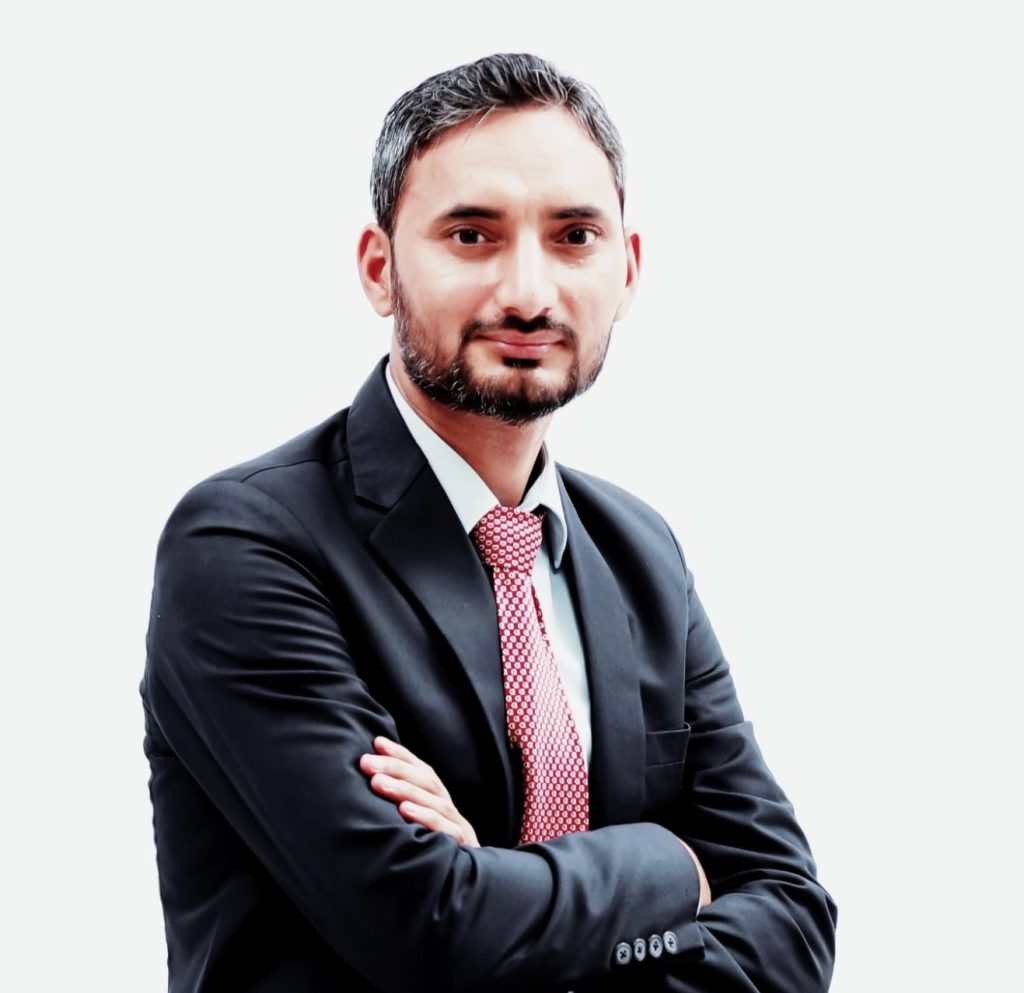
Dr. Usman Ghani

Associate Professor

PhD (Business Administration), University of Science and Technology of China, Hefei, China.

MS (Business Administration), Hazara University Mansehra, KP, Pakistan.

About

Dr. Usman has been associated with Iqra University since January 2021. He is an active researcher and published his research work in different SCI/SSCI journals like Journal of Management & Organization, Management Decision, Higher Education, Personnel Review, International Journal of Manpower etc. His area of research interest is Organizational Behavior, Human Resource Management, Knowledge Management, and Educational Management. He is a confident presenter at conferences and teacher at classrooms, and is able to explain complex information at all levels. Moreover, he is serving as a reviewer in different SCI/SSCI journals, and also working as an Associate Editor in Journal of Management Sciences (https://geistscience.com/journals/jms) published by Iqra University.

Area of Expertise

  • Organizational Behavior
  • Human Resource Management

Publications & Research Work

Dr. Muhammad Shahnawaz Adil

Dr. Muhammad Shahnawaz Adil is an Associate Professor of Leadership and Strategic Management at Iqra University, Karachi. He holds more than 17 years of full-time university teaching, research, mentorship, and graduate thesis supervision experience. Additionally, he has been serving as the Cluster Head (Management) since January 2020 at the Main Campus. He is currently a member of the advisory and review boards of 18 national and international scholarly journals. 

He has presented various research ideas at international conferences abroad and has published over 25 research papers in national and international journals with 700+ Google citations. He has also authored a monograph on Leadership and Strategy published in Germany. He is an HEC-approved PhD supervisor and five Ph.D. candidates are going to complete their doctoral thesis under his sole supervision. In addition to supervising several industrial projects, 32 MPhil and hundreds of MBA students have successfully passed their research thesis in the Management discipline under his sole supervision. His research interests include the dark side of leadership, workplace mistreatment, multilevel modeling, and creative performance in higher education. He completed a ten-day comprehensive Training of Trainers conducted by Sindh HEC in May 2023.

Dr. Shahnawaz earned his Ph.D. degree in Management from an AACSB and AMBA-accredited business school of Malaysia in 2021. Earlier, he received his MPhil from Iqra University, a ‘triple-crown’ (AACSB, AMBA, and EQUIS-accredited) MBA from Newcastle University (UK), Postgraduate Diploma from Stratford College London (UK), and B.Sc. (Honours) with Distinction from London Metropolitan University, UK. He has secured seven consecutive distinctions in his academic career and has clinched First Class First Position at Sindh Board of Technical Education. He has been associated with Iqra University as a permanent faculty member in the Department of Business Administration since August 2008. His main hobbies include horse-riding, playing scrabble, cooking, bird-farming, and long driving.

Paper1SSCI (Q1), Impact Factor 2.0

Ghani, U., Usman,M., Cheng, J., Mahmood, Q., Xingjiang Shao. (2024). Does ProfessionalSelf-Efficacy Provide a Shield in Troubling Situations? Evidence of Performanceand Thriving through Perceived Strength Use. Sage Open (Accepted).

Paper2SSCI (Q2), Impact Factor 1.4

Asim,M., Ghani, U., Athar, N. M., &Xu, Y. (2024). Abusive Supervision and Helping Behavior Among Nursing Staff: AModerated-Mediation Model. Journal ofHealth Organization and Management (Accepted)

Paper3SSCI (Q1), Impact Factor 5.5

Munir,T., & Ghani, U. (2024).Navigating the Green Path: Unraveling the Follower Green Awareness impact onLeader Green Organizational Commitment through Moderation and Mediationmodel. Sustainable Futures,7,100173.

Paper4SSCI (Q1), Impact Factor 2.0

Mohamed,H. H., Li, Y., Kiani, A., & Ghani,U. (2024). Raving Fans or Silent Critics? Brand Service Recovery’s Impacton Positive eWOM. SAGE Open, 14(1),21582440231219555.

Paper5ESCI (Q1) Impact Factor 2.8

Usman,M., Mehmood, Q., Ghani, U., &Ali, Z. (2023). Does positive supervisory support impede knowledge hiding viapsychological ownership and workplace thriving? VINE Journal of Information andKnowledge Management Systems, https://doi.org/10.1108/VJIKMS-08-2022-0278

Paper6SSCI (Q2), Impact Factor 3.3

Asim,M., Zhiying, L., Athar, N. M., Ghani,U., Khalid, J., & Xu, Y.(2023).Relationship of abusive supervision and employees’ helping behaviors:moderated-mediation perspective. InternationalJournal of Conflict Management, 34(2), 367-391.

Paper7ESCI (Q2) Impact Factor 3.0

Rashid,W., Ghani, U., Khan, K., & Usman, M. (2023). If you care I care:role of Green Human Resource Management in employees green behaviors. CogentBusiness & Management, 10(1), 2189768.

Paper8SSCI (Q1), Impact Factor 2.1

Khan,K. U., Atlas, F., Ali, W., Ghani, U., & Khan, F. (2023). The NexusBetween IT Capabilities and Firm Innovation Performance: The Mediating Effectof Supply Chain Agility. Science, Technology and Society28(4), 561-581.

Paper9SSCI (Q2) Impact Factor 1.6

Usman,M., Liu, Y., Mehmood, Q., & Ghani, U. (2023). Does employeework-related curiosity predict workplace thriving? The moderating role ofcore-self evaluations. Evidence-based HRM, 11(4), 611-627.

Paper10SSCI (Q1), Impact Factor 6.1

Dar,N., Usman, M., Cheng, J., & Ghani,U. (2022). Social Undermining at the Workplace: How Religious FaithEncourages Employees Who are Aware of Their Social Undermining Behaviors toExpress More Guilt and Perform Better. Journalof Business Ethics187(2), 371-383.

Paper11SSCI (Q2), Impact Factor 3.9

Islam,Z. U., Weng, Q., Ghani, U., &Naeem, R. M. (2022). How and when perceived job search incivility leads toreduced job search behavior. Personnel Review,52(4), 1273-1290.

Paper12SSCI (Q2), Impact Factor 3.8

Qasim,A., Usman, M., Ghani, U*., & Khan,K. (2022). Inclusive leadership and Employees’ Helping Behaviors: Role ofPsychological Factors. Frontiers inPsychology13, 888094.Paper13SSCI (Q1), Impact Factor 3.9

Majeed,M., Ghani, U., & Meng, W.(2022). Privacy concerns and online learning of postgraduate students throughthe lens of stimulus–organism–response model. Sustainability, 14(18), 11604.

Paper14SSCI (Q2), Impact Factor 2.7

Asim,M., Zhiying, L., Ghani, U., Athar,N. M., Farwa, H. U., & Yi, X. (2022). How appreciative leadership affectsemployees’ helping behaviors? The mediating role of emotions and the moderatingrole of organizational trust. InternationalJournal of Emerging Markets19(3),706-728.

Paper15SSCI (Q2), Impact Factor 2.8

Usman,M., Cheng, J*., Ghani, U*., Gul, H.,& Shah, W. U. (2021). Social Support and Perceived Uncertainties duringCOVID-19: Consequences for Employees’ Wellbeing. Current Psychology42, 10248–10259.

Paper 16SSCI (Q1), Impact Factor 5.0

Ghani, U., Zhai, X., Spector, J. M., Chen, N. S., Lin, L., Ding, D., &Usman, M. (2020). Knowledge hiding in higher education: role of interactionaljustice and professional commitment. Higher Education, 79(2), 325-344.

For more details see https://scholar.google.com.pk/citations?user=wU5LLjgAAAAJ&hl=en