

Applications for Skill-UP IV are LIVE! Click to Apply Now or Learn More!

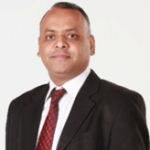
Prof. Dr. Muhammad Shahnawaz Adil​

Director - Academics, Advanced Studies and Research

2021 PhD (Management), Norther University of Malaysia (UUM), Malaysia (AACSB & AMBA accredited)

2013 MPhil (HRM), IQRA University, Karachi, Pakistan

2006 MBA (Management), Newcastle University, UK (AACSB, AMBA, & EQUIS accredited)

2004 Postgraduate Diploma in Computer Studies from Stratford College, London, UK

2003 B.Sc. Honors (Computing & Information Systems), London Guildhall University, London, UK

1997 D.A.E. (Mechanical Technology), Jinnah Polytechnic Institute, Karachi

About

Dr. Shahnawaz joined Iqra University as an Assistant Professor in the Department of Business Administration in August 2008. He is currently a Professor of Management with approx. two decades of experience in higher education, encompassing leadership, teaching, research, mentoring, thesis supervision and evaluation. He has held several key academic leadership positions, including Cluster Head (Management), Acting Registrar, Acting Dean (Faculty of Media Sciences), and Acting Dean (Faculty of Law). He has been serving as the Director (Academics, Advanced Studies, and Research) of the University since May 2024. Prior to his academic career, he gained valuable industry experience with British multinational corporations and the UK Federal Government, which has enabled him to bring a very strong global and multicultural perspective to his scholarly and administrative roles and responsibilities.

He is a member of the Management Association of Pakistan (MAP) since Spring 2024. He actively contributes to Iqra University through his membership on prominent governance bodies including the apex Academic Council, Office of Research, Innovation, and Commercialization (ORIC), Board of Advanced Studies and Research (BASR), Institutional Review Board (IRB), all Doctoral Committees, and all Boards of Faculty. He is also a member of the Board of Studies in the Department of Commerce at Benazir Bhutto Shaheed University Lyari and serves on the Advisory Board of the Journal of Liberal Arts and Human Sciences at Ziauddin University. In addition, he serves as a member of 11 international and 8 national review boards for scholarly publications, including Bahria University, Lahore University of Management Sciences, University of Karachi, and Institute of Business Management, reflecting his sustained commitment to academic quality assurance and research excellence. Under the dynamic leadership of the worthy Vice Chancellor, he spearheaded the establishment of Iqra Law School, launching a four-year LLB program recognized by both HEC and Pakistan Bar Council.

Prof. Shahnawaz is an active researcher in the discipline of Management, Organizational Behavior, and Leadership. He has presented his research ideas at esteemed national and international conferences abroad, with key research interests in the dark side of leadership, workplace mistreatment, and creative performance. He is a certified participant of the Sindh HEC Training of Trainers (ToT) program, reflecting his dedication to academic innovation and professional excellence. He has extended his intellectual contributions to several institutions, including Bahria College, Salim Habib University, Benazir Bhutto Shaheed University Lyari, Bahria University, Sindh Institute of Management and Technology, COMMECS College, Institute of Business Management, University of Management and Technology, and Forman Christian College University.

He earned his Ph.D. in Management from an AACSB- and AMBA-accredited university of Malaysia, an MPhil from Pakistan, and a Postgraduate Diploma, a triple-crown MBA, and a BSc (Hons) from the United Kingdom. He achieved seven consecutive academic distinctions and clinched First Class First Position with High Distinction at the Sindh Board of Technical Education. He has successfully supervised five PhD scholars, 32 MPhil candidates, and hundreds of MBA thesis students, along with overseeing 45 industrial projects. Committed to knowledge dissemination, he also manages his academic YouTube channel for global learners. He pursues personal interests including horse riding, Scrabble, Tennis, cooking, and long drives.

Area of Expertise

  • Leadership
  • Organizational Behavior
  • Management

Awards and Honors

  • Has been instilling sustainable values in thousands of university students and alumni since 2007.
  • Promoted twice within eight months: as Director (Academics, Advanced Studies and Research) in May 2024, and Professor of Management in Dec 2024.
  • Assumed the additional charge of Acting Dean (Faculty of Law) in April 2026.
  • Assumed the additional charge of Acting Dean (Faculty of Media Sciences) from Dec 2025 to Feb 2026.
  • Assumed additional charge as Chairman, Purchase Committee in Feb 2024 to date.
  • Spearheaded the establishment of Iqra Law School, launching the LLB program recognized by both HEC and Pakistan Bar Council.
  • Associate Editor, Journal of Management Sciences, Pakistan
  • Received the Long Service Award at IQRA University on Nov 07, 2024.
  • Appointed as a member of the Institutional Review Board in April 2024 — the only faculty member shortlisted from the entire Faculty of Business Administration.
  • Successfully managed the entire Cluster of Management for over 4.5 years.
  • Represented Iqra University Karachi for a ten-day Training of Trainers (ToT) under the Faculty Development Program conducted by Sindh HEC in May 2023.
  • Received a shield of appreciation in recognition of successfully organizing three successful academic events i.e., Research Colloquium, five different research workshops, and Strategic HR Forum in Dec 2022.
  • Successfully supervised 5 PhD, 32 MPhil and hundreds of MBA dissertations.
  • Received multiple cash rewards and token of appreciation in recognition of research publications in national and international journals.
  • Served as an Alumni Ambassador of Newcastle University (UK) in Pakistan.
  • Featured in Newcastle University’s NUBusiness Alumni Magazine 2008.
  • Represented Newcastle University (UK) at Rotary International in North England in 2006.
  • Represented Newcastle University (UK) at Pearl Continental Hotel Karachi in June 2007.
  • Seven consecutive Distinctions in academic career.
  • Certified Seaman with a Continuous Discharge Certificate (CDC) issued by the Ministry of Ports and Shipping Wing, Government of Pakistan
  • Secured First Position with High Distinction at the Sindh Board of Technical Education.

Research Publications

ORCID: 0000-0002-5295-7643


  • Aslam, F., & Adil, M. S. (2024). Female entrepreneurship: Exploring the interplay of motivation, empowerment and family well-being. Priority-The International Business Review, 2(2), 291-307.
  • Aslam, F., & Adil, M. S. (2024). Female entrepreneurship in Balochistan: Linking motivation, empowerment, and family well-being. Journal of Education & Humanities Research, 18(2), 136-153.
  • Hussain, I., & Adil, M. S. (2024). Pathways to equality: E-recruitment, social-media, and gender balance. Priority-The International Business Review, 2(2), 247-258
  • Hussain, D., & Adil, M. S. (2024). A critical analysis of the impact of political skills on organizational engagement and constructive behavior. Priority-The International Business Review, 2(2), 265-275.
  • Naz, F., & Adil, M. S. (2024). Effect of abusive supervision on employee Performance: mediating role of employee Resilience. Priority-The International Business Review, 2(2), 155-169.
  • Rehman M. F., & Adil, M. S. (2024). Green personality and environmental outcomes: The role of autonomous and controlled motivation in driving success. International Journal of Contemporary Issues in Social Sciences, 3(3), 2597-2609.
  • Adil, M.S., Khalid, S., Abro, A. A., & Ghauri, T.A. (2024). The Impact of Promotional Strategies and Customer Relationship Management on Competitive Advantage and Marketing Performance: Moderating Role of Organizational Commitment. Pakistan Journal of Humanities and Social Sciences, 12(2), 2044-2055.
  • Abbas, F., Adil, M.S., Rehman, A. A. (2024). Best HRM practices or context-specific HRM practices: Evidence from the telecommunications sector of Pakistan. Journal of Management and Research, 11(1), 1-32.
  • Adil, M. S., & Ab Hamid, K. (2023). Effect of leader creativity expectations on creative performance in higher education: mediating role of intrinsic motivation for creativity. Global Management Journal for Academic and Corporate Studies, 13(2), 1-27.
  • Kamran, M., Siddiqui, S., & Adil, M. S. (2023). Breaking Barriers: The influence of teachers’ attitudes on inclusive education for students with mild learning disabilities (MLD). Education Sciences, 13(6), 606-619.
  • Nayab, G., Thomas, M., & Adil, M. S. (2023). Antecedents of student’s motivation for learning mathematics and its effect on their proficiency in mathematics. Journal of Positive School Psychology, 7(5), 430-447.
  • Fareed, M., Khan, I., & Adil, M. S. (2022). Effect of three-dimensional writing anxiety on writing performance: Evidence from higher education in an ESL context. Webology, 19(4), 110-132.
  • Darazi, M. A., Saad, I., & Adil, M. S. (2021). Key factors influencing creative writing skill: students’ perceptions in an ELT context at higher education level. Pakistan Journal of Educational Research, 4(3), 36-74.
  • Adil, M. S., & Khan, U. (2020). Antecedents of cognitive job engagement and its effect on teacher performance: Moderating roles of occupational stress and mentoring. Journal of Education and Social Sciences, 8(1), 31-59.
  • Adil, M. S., & Nadeem. (2020). Effects of perceived professional learning and supportive work environment on job satisfaction and transfer of training. Journal of Management Sciences, 7(2), 33-55.
  • Adil, M. S., & Ab Hamid, K. (2020). Effect of teamwork on employee performance in high-tech engineering SMEs of Pakistan: A moderating role of supervisor support. South Asian Journal of Management Sciences, 14(1), 122-141.
  • Adil, M. S., & Qaiser, F. (2020). Effect of leader-member exchange relationship on occupational stress in the energy sector of Pakistan: A mediating role of job involvement. Journal of Management Sciences, 7(1), 64-87.
  • Adil, M. S., Ab Hamid, K., & Waqas, M. (2020). Impact of perceived organizational support and workplace incivility on work engagement and creative work involvement: A moderating role of creative self-efficacy. International Journal of Management Practice, 13(2), 117-150.
  • Adil, M. S., Awais, A., & Khan, I. (2019). Leader-member exchange, job satisfaction, affective commitment, and job stress: Implications for turnover intentions using covariance-based structural equation modelling. Pakistan Business Review, 21(2), 35-55.
  • Adil, M. S., & Ab Hamid, K. (2019). The relationships between creative self-efficacy, intrinsic motivation and creative performance. International Journal of Innovative Knowledge Concepts, 7(4), 64-70.
  • Adil, M. S., & Ab Hamid, K. (2019). The relationships between leader creativity expectations, intrinsic motivation, and creative performance. SEISENSE Journal of Management, 2(2), 58-68.
  • Adil, M. S., Owais, M., & Qamar, A. (2018). Impact of occupational stress, interpersonal trust, and organizational commitment on valence, OCB and job satisfaction: A variance-based SEM analysis. Journal of Management Sciences, 5(1), 38-61.
  • Adil, M. S., & Baig, M. (2018). Impact of job demands-resources model on burnout and employee’s well-being: Evidence from the pharmaceutical organizations of Karachi. IIMB Management Review, 30(2), 119-131.
  • Adil, M. S., Khan, M. N., & Khan, I. (2018). Impact of leader creativity expectations on employee creativity: Assessing the mediating and moderating role of creative self-efficacy. International Journal of Management Practice, 11(2), 171-189.
  • Adil, M. S., & Ab Hamid, K. (2017). Impact of individual feelings of energy on creative work involvement: A mediating role of leader-member exchange. Journal of Management Sciences, 4(1), 97-120.
  • 2016         Adil, M. S., & Awais, A. (2016). Effects of leader-member exchange, interpersonal relationship, individual feeling of energy and creative work involvement towards turnover intention: A path analysis using structural equation modeling. Asian Academy of Management Journal, 21(2), 99-133.
  • Adil, M. S. (2016). Impact of change readiness on commitment to technological change, focal, and discretionary behaviors: Evidence from the manufacturing sector of Karachi. Journal of Organizational Change Management, 29(2), 222-241.
  • Adil, M. S. (2015). Strategic human resource management practices and competitive priorities of the manufacturing performance in Karachi. Global Journal of Flexible Systems Management, 16(1), 37-61.
  • Alvi, H. A, Hanif, M., Adil, M. S., Ahmed, R. R., & Vveinhardt, J. (2014). Impact of Organizational Culture on Organizational Commitment and Job Satisfaction. European Journal of Business and Management, 6(27), 30-39.
  • Adil, M. S. (2014). Impact of leader’s change-promoting behavior on readiness for change: A mediating role of organizational culture. Journal of Management Sciences, 1(2), 113-150.
  • Nizam, S. A., & Adil. M. S. (2014). Determinants of teacher’s job satisfaction: Evidence from the primary and secondary schools of Karachi. Journal of Education and Social Sciences, 2(2), 102-118.
  • Adil, M. S., & Fatima, N. (2013). Impact of rewards system on teacher’s motivation: Evidence from the private schools of Karachi. Journal of Education and Social Sciences, 1(1), 12-30.

Publications & Research Work

Dr. Muhammad Shahnawaz Adil

Dr. Muhammad Shahnawaz Adil is an Associate Professor of Leadership and Strategic Management at Iqra University, Karachi. He holds more than 17 years of full-time university teaching, research, mentorship, and graduate thesis supervision experience. Additionally, he has been serving as the Cluster Head (Management) since January 2020 at the Main Campus. He is currently a member of the advisory and review boards of 18 national and international scholarly journals. 

He has presented various research ideas at international conferences abroad and has published over 25 research papers in national and international journals with 700+ Google citations. He has also authored a monograph on Leadership and Strategy published in Germany. He is an HEC-approved PhD supervisor and five Ph.D. candidates are going to complete their doctoral thesis under his sole supervision. In addition to supervising several industrial projects, 32 MPhil and hundreds of MBA students have successfully passed their research thesis in the Management discipline under his sole supervision. His research interests include the dark side of leadership, workplace mistreatment, multilevel modeling, and creative performance in higher education. He completed a ten-day comprehensive Training of Trainers conducted by Sindh HEC in May 2023.

Dr. Shahnawaz earned his Ph.D. degree in Management from an AACSB and AMBA-accredited business school of Malaysia in 2021. Earlier, he received his MPhil from Iqra University, a ‘triple-crown’ (AACSB, AMBA, and EQUIS-accredited) MBA from Newcastle University (UK), Postgraduate Diploma from Stratford College London (UK), and B.Sc. (Honours) with Distinction from London Metropolitan University, UK. He has secured seven consecutive distinctions in his academic career and has clinched First Class First Position at Sindh Board of Technical Education. He has been associated with Iqra University as a permanent faculty member in the Department of Business Administration since August 2008. His main hobbies include horse-riding, playing scrabble, cooking, bird-farming, and long driving.

ORCID: 0000-0002-5295-7643


  • Aslam, F., & Adil, M. S. (2024). Female entrepreneurship: Exploring the interplay of motivation, empowerment and family well-being. Priority-The International Business Review, 2(2), 291-307.
  • Aslam, F., & Adil, M. S. (2024). Female entrepreneurship in Balochistan: Linking motivation, empowerment, and family well-being. Journal of Education & Humanities Research, 18(2), 136-153.
  • Hussain, I., & Adil, M. S. (2024). Pathways to equality: E-recruitment, social-media, and gender balance. Priority-The International Business Review, 2(2), 247-258
  • Hussain, D., & Adil, M. S. (2024). A critical analysis of the impact of political skills on organizational engagement and constructive behavior. Priority-The International Business Review, 2(2), 265-275.
  • Naz, F., & Adil, M. S. (2024). Effect of abusive supervision on employee Performance: mediating role of employee Resilience. Priority-The International Business Review, 2(2), 155-169.
  • Rehman M. F., & Adil, M. S. (2024). Green personality and environmental outcomes: The role of autonomous and controlled motivation in driving success. International Journal of Contemporary Issues in Social Sciences, 3(3), 2597-2609.
  • Adil, M.S., Khalid, S., Abro, A. A., & Ghauri, T.A. (2024). The Impact of Promotional Strategies and Customer Relationship Management on Competitive Advantage and Marketing Performance: Moderating Role of Organizational Commitment. Pakistan Journal of Humanities and Social Sciences, 12(2), 2044-2055.
  • Abbas, F., Adil, M.S., Rehman, A. A. (2024). Best HRM practices or context-specific HRM practices: Evidence from the telecommunications sector of Pakistan. Journal of Management and Research, 11(1), 1-32.
  • Adil, M. S., & Ab Hamid, K. (2023). Effect of leader creativity expectations on creative performance in higher education: mediating role of intrinsic motivation for creativity. Global Management Journal for Academic and Corporate Studies, 13(2), 1-27.
  • Kamran, M., Siddiqui, S., & Adil, M. S. (2023). Breaking Barriers: The influence of teachers’ attitudes on inclusive education for students with mild learning disabilities (MLD). Education Sciences, 13(6), 606-619.
  • Nayab, G., Thomas, M., & Adil, M. S. (2023). Antecedents of student’s motivation for learning mathematics and its effect on their proficiency in mathematics. Journal of Positive School Psychology, 7(5), 430-447.
  • Fareed, M., Khan, I., & Adil, M. S. (2022). Effect of three-dimensional writing anxiety on writing performance: Evidence from higher education in an ESL context. Webology, 19(4), 110-132.
  • Darazi, M. A., Saad, I., & Adil, M. S. (2021). Key factors influencing creative writing skill: students’ perceptions in an ELT context at higher education level. Pakistan Journal of Educational Research, 4(3), 36-74.
  • Adil, M. S., & Khan, U. (2020). Antecedents of cognitive job engagement and its effect on teacher performance: Moderating roles of occupational stress and mentoring. Journal of Education and Social Sciences, 8(1), 31-59.
  • Adil, M. S., & Nadeem. (2020). Effects of perceived professional learning and supportive work environment on job satisfaction and transfer of training. Journal of Management Sciences, 7(2), 33-55.
  • Adil, M. S., & Ab Hamid, K. (2020). Effect of teamwork on employee performance in high-tech engineering SMEs of Pakistan: A moderating role of supervisor support. South Asian Journal of Management Sciences, 14(1), 122-141.
  • Adil, M. S., & Qaiser, F. (2020). Effect of leader-member exchange relationship on occupational stress in the energy sector of Pakistan: A mediating role of job involvement. Journal of Management Sciences, 7(1), 64-87.
  • Adil, M. S., Ab Hamid, K., & Waqas, M. (2020). Impact of perceived organizational support and workplace incivility on work engagement and creative work involvement: A moderating role of creative self-efficacy. International Journal of Management Practice, 13(2), 117-150.
  • Adil, M. S., Awais, A., & Khan, I. (2019). Leader-member exchange, job satisfaction, affective commitment, and job stress: Implications for turnover intentions using covariance-based structural equation modelling. Pakistan Business Review, 21(2), 35-55.
  • Adil, M. S., & Ab Hamid, K. (2019). The relationships between creative self-efficacy, intrinsic motivation and creative performance. International Journal of Innovative Knowledge Concepts, 7(4), 64-70.
  • Adil, M. S., & Ab Hamid, K. (2019). The relationships between leader creativity expectations, intrinsic motivation, and creative performance. SEISENSE Journal of Management, 2(2), 58-68.
  • Adil, M. S., Owais, M., & Qamar, A. (2018). Impact of occupational stress, interpersonal trust, and organizational commitment on valence, OCB and job satisfaction: A variance-based SEM analysis. Journal of Management Sciences, 5(1), 38-61.
  • Adil, M. S., & Baig, M. (2018). Impact of job demands-resources model on burnout and employee’s well-being: Evidence from the pharmaceutical organizations of Karachi. IIMB Management Review, 30(2), 119-131.
  • Adil, M. S., Khan, M. N., & Khan, I. (2018). Impact of leader creativity expectations on employee creativity: Assessing the mediating and moderating role of creative self-efficacy. International Journal of Management Practice, 11(2), 171-189.
  • Adil, M. S., & Ab Hamid, K. (2017). Impact of individual feelings of energy on creative work involvement: A mediating role of leader-member exchange. Journal of Management Sciences, 4(1), 97-120.
  • 2016         Adil, M. S., & Awais, A. (2016). Effects of leader-member exchange, interpersonal relationship, individual feeling of energy and creative work involvement towards turnover intention: A path analysis using structural equation modeling. Asian Academy of Management Journal, 21(2), 99-133.
  • Adil, M. S. (2016). Impact of change readiness on commitment to technological change, focal, and discretionary behaviors: Evidence from the manufacturing sector of Karachi. Journal of Organizational Change Management, 29(2), 222-241.
  • Adil, M. S. (2015). Strategic human resource management practices and competitive priorities of the manufacturing performance in Karachi. Global Journal of Flexible Systems Management, 16(1), 37-61.
  • Alvi, H. A, Hanif, M., Adil, M. S., Ahmed, R. R., & Vveinhardt, J. (2014). Impact of Organizational Culture on Organizational Commitment and Job Satisfaction. European Journal of Business and Management, 6(27), 30-39.
  • Adil, M. S. (2014). Impact of leader’s change-promoting behavior on readiness for change: A mediating role of organizational culture. Journal of Management Sciences, 1(2), 113-150.
  • Nizam, S. A., & Adil. M. S. (2014). Determinants of teacher’s job satisfaction: Evidence from the primary and secondary schools of Karachi. Journal of Education and Social Sciences, 2(2), 102-118.
  • Adil, M. S., & Fatima, N. (2013). Impact of rewards system on teacher’s motivation: Evidence from the private schools of Karachi. Journal of Education and Social Sciences, 1(1), 12-30.