
• Ph.D. (Electrical Engineering, Digital Image Processing) – NUST, Karachi, 2018
(CGPA: 3.91/4.00)
• M.S. (Electronic Engineering, Communication) – SSUET, Karachi, 2009 (CGPA:
4.00/4.00)
• B.E. (Electrical Engineering, with Honours) – UET, Taxila, 2000 (83.94%)
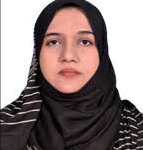
“An accomplished academic with over 24 years of teaching, research, and leadership experience in Artificial Intelligence, Deep Learning, Digital Image Processing, and Computer Vision. Author of 20+ peer-reviewed publications, she specializes in medical image analysis and AI-driven cancer diagnosis. She is an experienced PhD supervisor, international journal reviewer, conference speaker, and recipient of multiple Best Teacher Awards.”
1. Fatima, Maria, Razia Zia, Irfan Ahmed Usmani, Dinara Turzhanova, and Rahmat Ullah.”HMC-net: a ResNet fused hierarchical multi-scale cross-attention architecture for mammographic breast malignancy recognition incorporating explainable AI.” Frontiers in Oncology 16 (2026): 1787210.
2. Sadaf Raza, Razia Zia, Irfan Ahmed Usmani “Cross-Dataset Generalization of RCED-UNet3+ for Robust Lung Nodule Segmentation. Global Research journal of Natural Science and Technology Grjnst) Volume: 03 – Issue 4 (2025)
3. Sadaf Raza, Razia Zia, “Trans RCED-UNet3+: a hybrid CNN-transformer model for precise lung nodule segmentation.” Frontiers in Oncology 15 (2025): 1654466.
4. Fatima, Maria, Razia Zia, and Irfan Ahmed Usmani. “A Hybrid Framework Integrating Deep Learning and XAI for Breast Cancer Detection with Stratified Cross-Validation.”Systems and Soft Computing (2025): 200412.
5. Sadaf Raza, Razia Zia, Usmani, and Waheed, 2024. RCED-UNet3+: Unleashing Residual Connections in Encoder-Decoder Architecture for Precise Lung Nodule Segmentation.Traitement du Signal, 41(6), p.3063.
6. (Link:https://www.proquest.com/openview/eb601223e16ef2b4250bde18adc5243a/1?cbl
=2069443&pq-origsite=gscholar)
7. Muhammad Ovais Akhter, Razia Maroof, Noman Ahmed Siddiqui. “Integration of
Outcome-Based Education Assessment Tools with Graduate Employability Analysis for
Evidence-Based Curriculum Development in Pakistan’s Higher Education Institutions”.
Pakistan Journal of Engineering, Technology and Science. 14, 1 (Jun. 2026), 145–169.
DOI:https://doi.org/10.22555/pjets.v14i1.1455.
8. Kanwal, Moona and Ahmed, Shakil and Naqvi, Shabbar and Maroof, Razia., “DO
MALES AND FEMALES EXPERIENCE THE INTERNET DIFFERENTLY?
CLASSIFYING GENDER THROUGH MACHINE LEARNING,” Advances and
Applications in Statistics, vol. 93, no. 8, pp. 925-944, 2026. doi:10.17654/0972361726044.
9. Rub, Raiyah, Shaheena Noor, Irfan Ahmed Usmani, Razia Maroof, and Gul Munir.
“ADVERSARIAL ROBUSTNESS EVALUATION OF CNN-BASED TRAFFIC SIGN
RECOGNITION SYSTEMS.” Spectrum of Engineering Sciences 4, no. 4 (2026): 748-763.
10. Sania Tanvir, Sidra Syed, Hussain, S., Razia Zia, Rashid, M. and Zahid, H., 2024.
Detection of Vitiligo Through Machine Learning and Computer‐Aided Techniques: A
Systematic Review. BioMed Research International, 2024(1), p.3277546.
(Link: https://onlinelibrary.wiley.com/doi/full/10.1155/bmri/3277546)
11. Razia Maroof, Irfan Ahmed Usmani, and Atruba Feroze. “English Text Recognition
Based on Convolutional Neural Network (CNN).” Sir Syed University Research Journal
of Engineering & Technology 14.2 (2024): 73-78.
(Link:https://sirsyeduniversity.edu.pk/ssurj/rj/index.php/ssurj/article/view/644)
12. Rafique, Ayesha, Noreen Akram, Syed Muhammad Umar Talha, Muhammad Umar Khan,
Razia Zia, and Muhammad Aamir. “Disruptions caused in Pakistan by the COVID-19
Pandemic and their Wireless Technology Based Solutions.” Wireless Personal
Communications (2024): 1-17.
(Link: https://link.springer.com/article/10.1007/s11277-024-11327-5)
13. Usmani IA, Qadri MT, Razia Zia, Alrayes FS, Saidani O, Dashtipour K. “Interactive
Effect of Learning Rate and Batch Size to Implement Transfer Learning for Brain Tumor
Classification. Electronics. 2023 Feb 15;12(4):964.
(Link: https://www.mdpi.com/2079-9292/12/4/964)
14. Irfan Ahmed Usmani, Muhammad Tahir Qadri, Razia Zia, Asif Aziz & Saeed F, “Cartesian
Product Based Transfer Learning Implementation for Brain Tumor Classification”. CMCCOMPUTERS MATERIALS & CONTINUA, 73(2), 4369-4392. (May 2022) (Impact Factor: 3.86).
(Link:https://cdn.techscience.cn/ueditor/files/cmc/TSP_CMC-73-2/TSP_CMC_30698/TSP_CMC_30698.pdf)
15. Muhammad Ovais Akhter, Najam Muhammad Amin, and Razia Zia. “Design and
optimisation of high‐efficient class‐F ULP‐PA using envelope tracking supply bias control
for long‐range low power wireless personal area network IEEE 802.11 ah standard using
65 nm CMOS technology.” IET Circuits, Devices & Systems (June 2022) (Impact Factor:
1.297)(Link: https://ietresearch.onlinelibrary.wiley.com/doi/full/10.1049/cds2.12125)
16. Razia Zia, Pervez Akhtar, Arshad Aziz, Dure E Shahwar Kundi” Multi-resolution
Transform based hybrid feature extraction technique for differentiating Glioma grades”:
International Journal of Wavelets, Multiresolution and Information Processing (June 2018)
(Impact Factor: 1.408).
(Link: https://www.worldscientific.com/doi/abs/10.1142/S0219691318500480)
17. Razia Zia, Pervez Akhtar, Arshad Aziz,“ A Rectangular Window Based Cropping method
for generalization of Brain Tumor Classification Systems”. In International Journal of
Imaging systems and Technology. (pp. 1-10). (Dec 2017) (Impact Factor: 2). (Link:
https://onlinelibrary.wiley.com/doi/full/10.1002/ima.22266)
18. Sadaf Raza, Maria Fatima, Razia Zia, Ali Akbar Siddique, “Manual Control of Robotic
Armfor Long Distance Applications”, In ILMA Journal of Technology & Software
Management, Vol2, Issue 1, 2021.(Link: https://ijtsm.ilmauniversity.edu.pk/arc/Vol2/pdf/3.pdf)
19. Agha Yasir Ali, Razia Zia; “Advanced Modulation Scheme for Visible Light
Communication”, Indian Journal of Science and Technology (IJST) May 2019.
(Link:https://indjst.org/articles/advanced-modulation-scheme-for-visible-lightcommunication)
20. Lubna Farhi, Razia Zia, Zain Anwar Ali. “Performance Analysis of Machine Learning
Classifiers for Brain Tumor MR Images” Sir Syed University Research Journal of
Engineering & Technology 8.1 (2018): 23-28.
(Link: https://sirsyeduniversity.edu.pk/ssurj/rj/index.php/ssurj/article/view/36)
21. Razia Zia, Pervez Akhtar, “Performance comparison of LRBAC with DRSLE level set for
the segmentation of tumors in MRI Images” Mehran University Research Journal of
Engineering & Technology, Volume 34, Issue S1, August 2015 (pp. 69-76), [ISSN 0254-
7821]
(Link:https://www.researchgate.net/profile/MajidaKazmi/publication/281810430_Performance_comparison_of_LRBAC_method_with_DR
LSE_for_the_segmentation_of_tumors_in_MRI_Images/links/5624d0c208ae93a5c92d2acf/Performance-comparison-of-LRBAC-method-with-DRLSE-for-the-segmentation-oftumors-in-MRI-Images.pdf)
22. Irfan Usmani, Arshad Aziz, Muzzafer Ali Rao, Razia Zia. “Comparison Between FPGA
Logic Resources And Embedded Resources Used By Discrete Arithmetic (DA)
Architecture To Design FIR Filter.” International Journal of Scientific Engineering and
Technology, (2014): 440- 443.
(Link:https://www.indianjournals.com/ijor.aspx?target=ijor:ijset1&volume=3&issue=4&
article=031)
23. Razia Zia, Muzzafer Rao, Arshad Aziz, Pervez Akhtar: “Efficient utilization of FPGA
using LUT-6 Architecture. In Applied Mechanics and Materials 2013 (Vol. 241, pp. 2548-
2554). Trans Tech Publications.
(Link: https://www.scientific.net/AMM.241-244.2548)
24. Razia Zia, Pervez Akhtar, Arshad Aziz, Maroof Ali Shah, Dure E Shahwar Kundi “Non
Sub- sampled Contourlet Transform based Feature Extraction Technique for
Differentiating Glioma Grades using MRI Images“ In 30th Australasian Joint Conference
on Artificial Intelligence (pp. 289-300). August 2017, Springer Book Chapter, Cham. (
link:
https://books.google.com.pk/books?hl=en&lr=&id=k64sDwAAQBAJ&oi=fnd&pg=PP6
&dq=Razia+Zia,+Pervez+Akhtar,+Arshad+Aziz,+Maroof+Ali+Shah,+Dure+E+Shahwar+Kundi+%E2%80%9CNon+Sub+sampled+Contourlet+Transform+based+Feature+Extraction+Technique+for+Differentiating+Glioma+Grades+using+MRI+Images%E2%80%9C+In+30th+Australasian+Joint+Conference+on+Artificial+Intelligence(pp.+289300).+August+2017,+Springer+Book+Chapter,+Cham.+&ots=DnoBAarkBK&sig=9QeyWxY9I01rR1u2x6Utn55CDwc&redir_esc=y#v=onepage&q=Razia%20Zia%2C%20Pervez%20Akhtar%2C%20Arshad%20Aziz%2C%20Maroof%20Ali%20Shah%2C%20Dure%20E%20Shahwar%20Kundi%20%E2%80%9CNon%20Sub%20sampled%20Contourlet%20Transform%20based%20Feature%20Extraction%20Technique%20for%20Differentiating%20Glioma%20Grades%20using%20MRI%20Images%E2%80%9C%20In%2030th%20Australasian%20Joint%20Conference%20on%20Artificial%20Intelligence%20(pp.%20289300).%20August%202017%2C%20Springer%20Book%20Chapter%2C%20Cham.&f=false)
25. Soomro, Asad Hameed, N. Shaikh, Razia Zia, Rafaqat Hussain Arain, and Samar Abbas
Mangi. “Intelligent Video Surveillance Techniques to Detect Suspicious Human Activities:
A Critical Review.” (2021).
(Link: https://ijtsm.ilmauniversity.edu.pk/arc/Vol2/i2/pdf/3.pdf)
26. Adnan Afroz, Razia Zia, Andres Ortis Garcia, Muhammad Umar Khan, Umair Jilani and
Khawaja Masood Ahmed Ahmed, “Skin lesion classification using machine learning
approach: A survey”, In Global Conference on Wireless & Optical Technologies 2021
(GCWOT’21). (Link: https://ieeexplore.ieee.org/abstract/document/9772915)
27. Afroz, Adnan, Razia Zia, Shaheena Noor, Andres Ortiz Garcia, Sarman Shams, and Shoaib
Mughal. “Implementation of Convolutional Neural Networks deep learning approach to
Classify Melanoma Skin Cancer.” In 2023 Global Conference on Wireless and Optical
Technologies (GCWOT), pp. 1-7. IEEE, 2023.(Link: https://ieeexplore.ieee.org/abstract/document/10064671)